
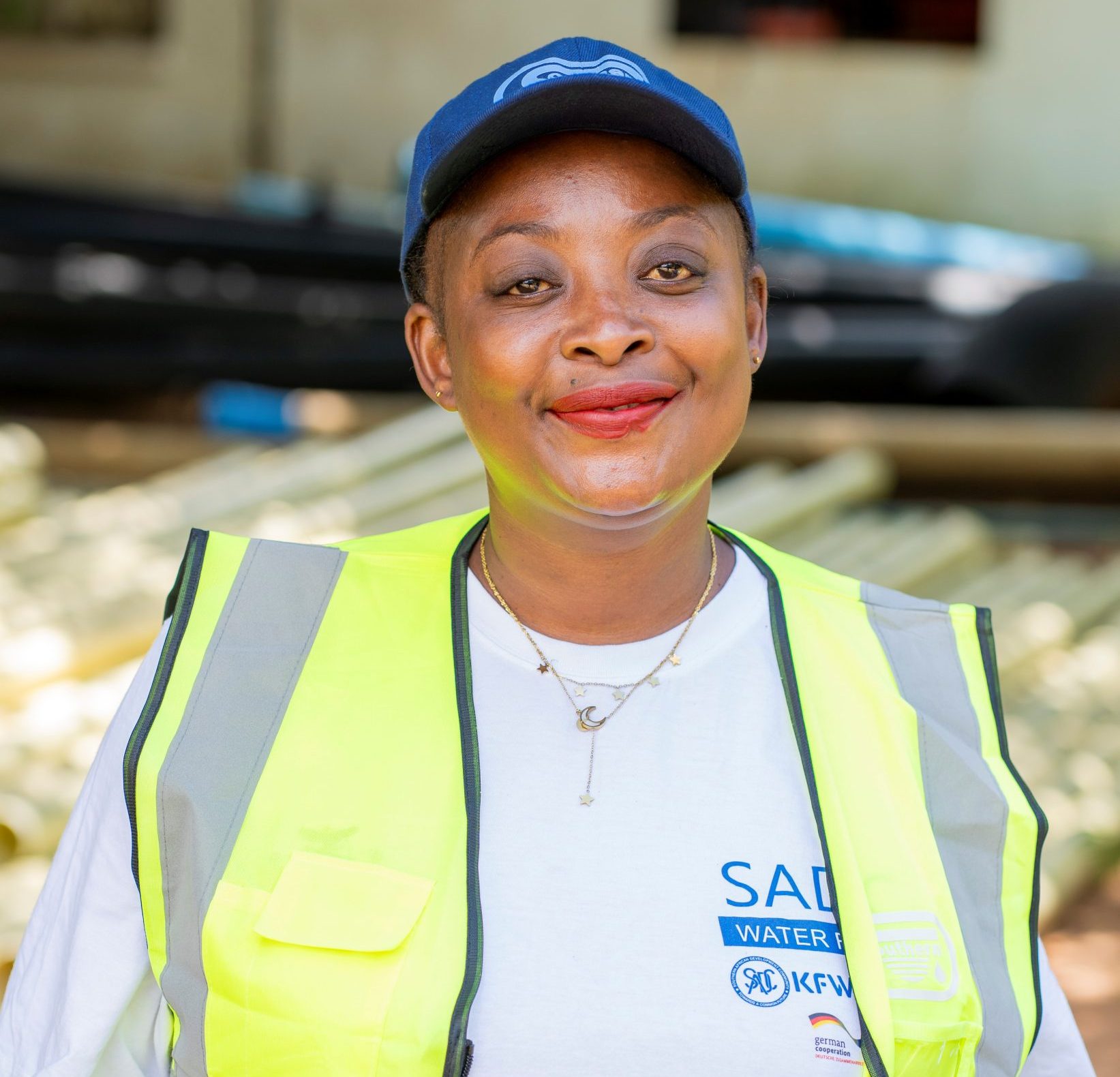
In Zambia’s Southern Province, the success of water and sanitation service delivery is increasingly being shaped not only by infrastructure investment, but also by communication systems that build trust between utilities and the communities they serve.
At the centre of this work in Livingstone is Lungowe Mutomwenu, Public Relations Officer at Southern Water and Sanitation Company (SWSCO). Her role focuses on ensuring that customers are informed, engaged, and able to interact with the utility in real time, particularly during service interruptions, project rollouts, and infrastructure upgrades.
Her work has been strengthened through broader institutional capacity-building and service delivery reforms supported by WSUP, which have helped SWSCO improve customer engagement models, expand feedback channels, and strengthen responsiveness in rapidly growing urban and peri-urban areas.
In this Q&A, Lungowe reflects on her role as a communicator in a male-dominated utility sector, the evolution of customer engagement systems, and how improved communication is reshaping trust and service delivery outcomes in Southern Province.
Q: How has your role evolved within the utility?
When I joined, there was only one Public Relations Manager covering the entire organisation from the head office. Over time, the function was decentralised and strengthened, allowing us to have dedicated communications support closer to operations. My role now is much more active and field-facing, ensuring continuous engagement with customers across multiple towns.
Q: What are the key challenges you face in your role?
One of the main challenges is coordination across a wide service area. We serve 21 towns in Southern Province, but I am based in Livingstone. This sometimes creates communication gaps, where I may not immediately have information on what is happening in other towns unless I am directly informed by regional teams. This can affect how quickly we respond to customers.
Q: How have you addressed these communication gaps?
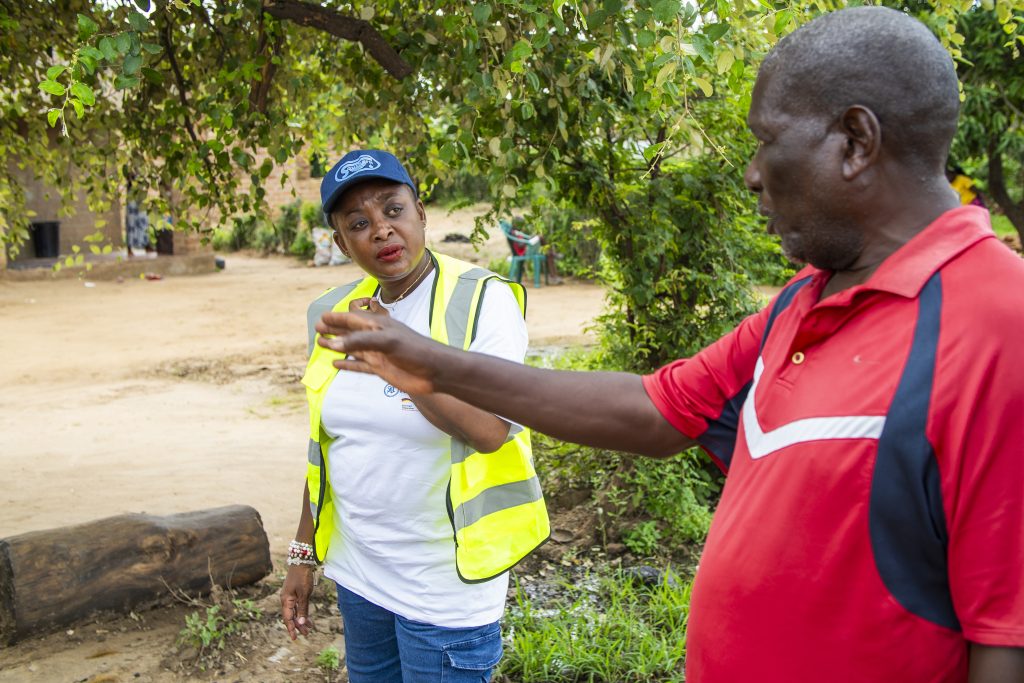
We have introduced multiple communication channels to bridge this gap. One of the most effective has been the use of WhatsApp groups, with over 30 customer groups across different towns. I manage these groups to ensure real-time updates and feedback flow between customers and the utility. We also use our Facebook page and a shortcode (*5757#), which allows customers to report complaints directly.
Q: What role has WSUP-supported capacity building played in your work?
Through WSUP, I have undergone various trainings and workshops, which have strengthened my ability to communicate more effectively and efficiently. These capacity-building efforts have helped me improve how I engage with customers, manage feedback, and ensure that communication is timely and accurate.
Q: As a woman in a largely male-dominated utility, what challenges have you faced?
At times, there is a perception that women may not be suited for certain roles, especially in technical environments. You may find yourself excluded from discussions or decisions. However, I have learned to be proactive, ensuring I am present in key meetings and making sure my voice is heard. In this space, you have to assert yourself and take up representation for your department.
Q: What systemic or cultural shifts are needed to accelerate women’s participation in WASH leadership? How can utilities, governments, and civil society help drive these changes?
One of the biggest shifts needed is around perception. There is still a belief in some spaces that leadership, especially in technical sectors like WASH, is more suited to men. That needs to change, starting within institutions themselves. Utilities can support this by creating space for women to participate in decision-making, not just implementation. Governments and partners can also invest in training and leadership development for women so that they are confident and equipped to take up these roles. At the same time, women also need to be encouraged to step forward, speak up, and take opportunities when they come. When more women are visible in leadership, it becomes easier for others to follow.
Q: How are you supporting other women within the organisation?
I focus on encouragement and visibility. I make sure women are not sidelined in conversations and that their ideas are heard and represented. Where necessary, I step in to ensure their contributions are brought into decision-making spaces. Communication is key to ensuring inclusion.
Q: How has community engagement changed perceptions of SWSCO services?
We use open days, sensitisation meetings, and feedback mechanisms to understand how customers perceive our services. This helps us identify gaps and improve performance. It has also allowed us to tailor messages to different communities, because each area has different needs and cannot be engaged in the same way.
Q: Can you share an example of impact from a WSUP-supported project?
The Ngwenya Water Supply and Sanitation Project is very close to my heart. Before the intervention, many households had connections but were not receiving water. After WSUP-supported upgrades and system improvements, more than 500 additional households were connected, and many previously unserved customers began receiving water. It is very powerful to hear residents say they no longer need to fetch water from wells and can now access safe water at home. As a communicator, that kind of feedback confirms that the work we are doing is making a real difference.
Q: How did WSUP influence your professional growth and leadership role?
WSUP played a key role in my deployment to Livingstone, where communication gaps were more pronounced and customer engagement needed strengthening. This move allowed me to work more directly with communities and improve real-time communication systems, including the WhatsApp engagement model. It has also helped me grow professionally by exposing me to operational realities and project implementation at the ground level, beyond head office coordination.
Q: What impact has improved communication had on customers?
Customers now have more direct access to information and updates. They are able to reach us easily, report issues, and receive timely responses. Over time, this has improved trust and made communication more interactive and transparent. People now recognise our responsiveness and appreciate being kept informed.
Q: What lessons would you share for improving communication in low-income or peri-urban communities?
The most important lesson is that communication must be tailored. You need to understand the community before engaging it. Different areas have different realities, and messaging must reflect that. For example, you cannot promote flush toilets in areas where pit latrines are the norm. Instead, communication should focus on practical, relevant guidance that matches the lived reality of that community. Context matters.
Q: What message would you like to leave with partners supporting this work?
I would like to appreciate WSUP and other partners for their continued support in implementing projects such as Ngwenya Phase 1 and 2, Zeko Baton, and Nakatindi. These interventions have made a visible difference in people’s lives. Customers themselves acknowledge the improvements in water access and service reliability. However, this progress is the result of strong partnerships between the utility, funders, and implementing partners working together toward better service delivery.