
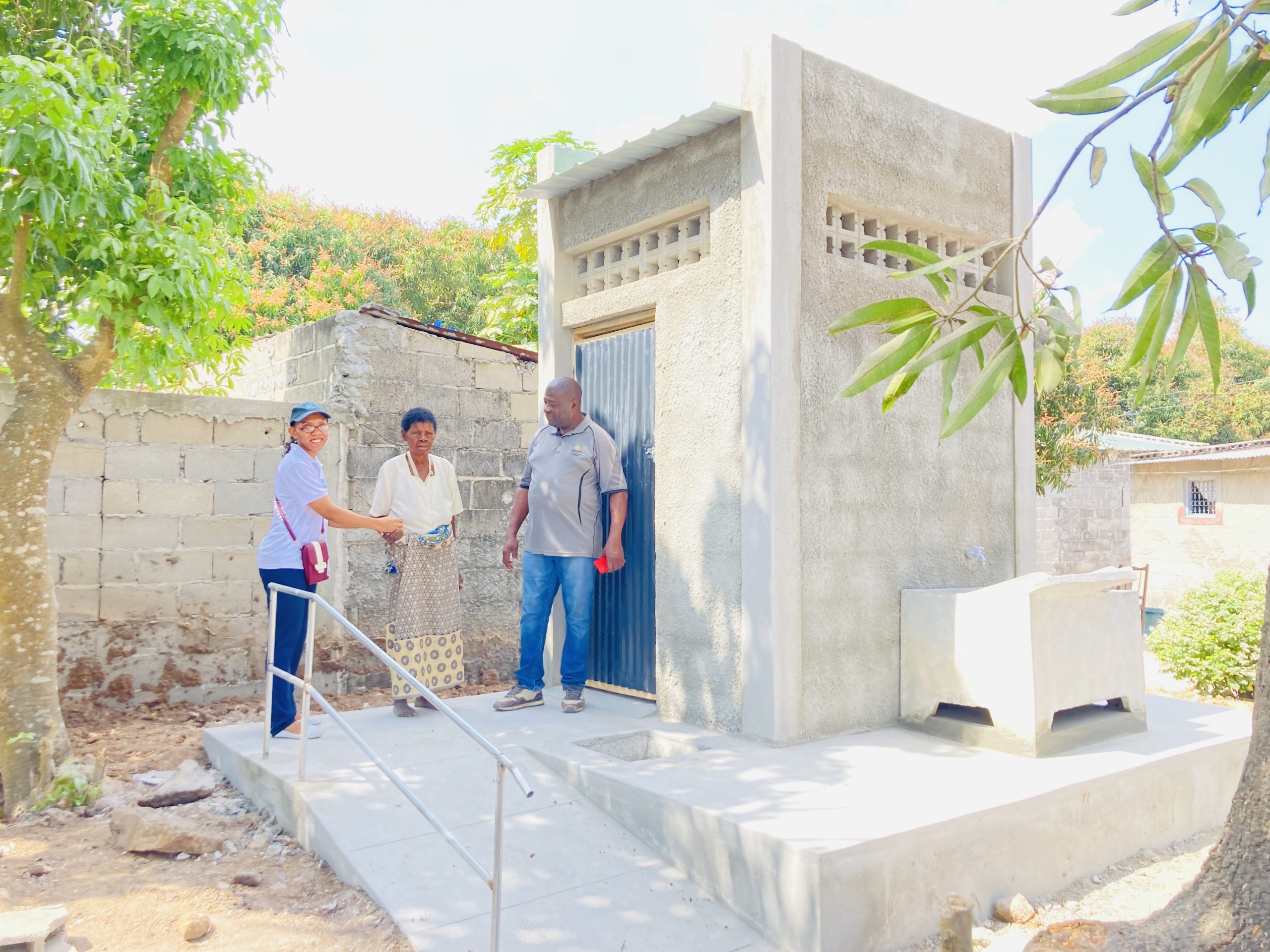
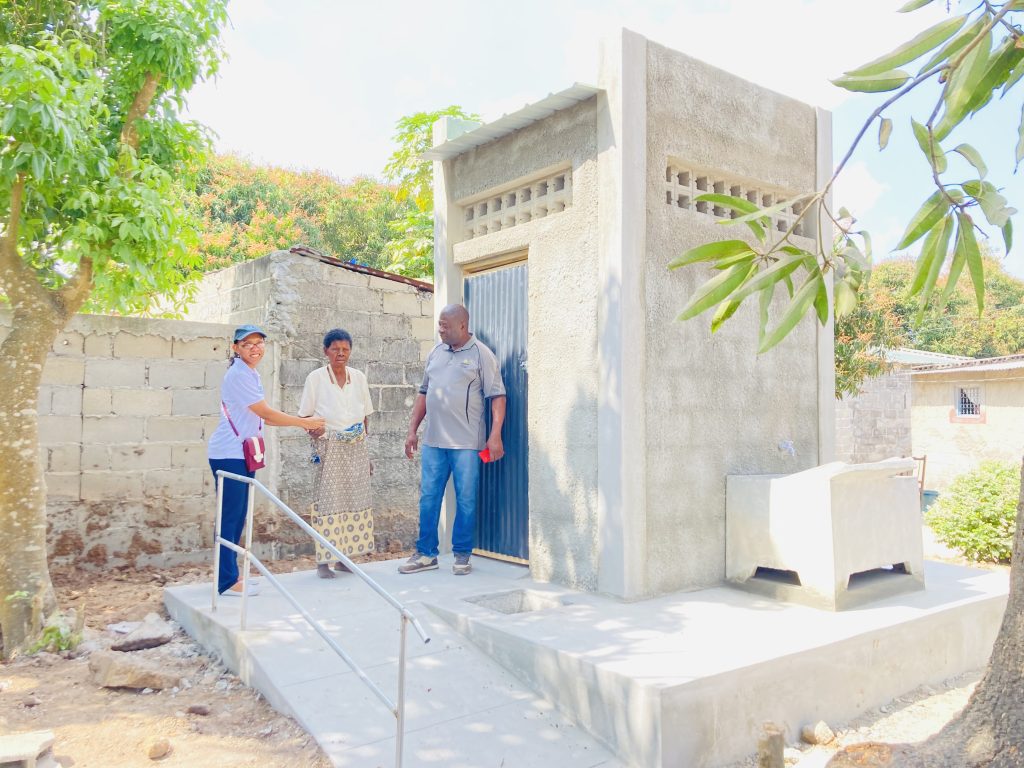
On the narrow backstreets of Beira’s Munhava neighbourhood, Teresa crouches beside her family’s new toilet, a small, bright-blue structure with a vented pit and a proper slab. It is not just a toilet, she says with a quiet smile, but a symbol that “things are finally starting to change.”
For years, her family relied on an open pit latrine that overflowed every rainy season, contaminating the ground and spreading disease. “We used to live with the smell and the flies,” she recalls. “Now it is clean. We can sleep without worrying.”
Teresa’s toilet, and thousands like it appearing across Mozambique’s urban centres, is the visible outcome of a quieter revolution, one built not with concrete or pipes, but with policy, regulation, and patient collaboration. Behind the scenes, a decade-long partnership between WSUP and Mozambique’s national water and sanitation regulator, Autoridade Reguladora de Aguas (AURA), has reshaped how sanitation is governed, financed, and delivered in cities across the country.
What began as a conversation in 2013 about the absence of sanitation regulation has become one of the most significant institutional reforms in Mozambique’s WASH sector. The new urban sanitation regulatory framework, developed with WSUP’s support and formally approved in 2020, now provides a foundation for cities to manage, finance, and expand sanitation services, particularly for low-income communities long left behind.
A decade of neglect and a turning point
For decades, Mozambique’s urban sanitation services were characterised by chronic underinvestment and fragmentation. Municipalities lacked both resources and authority to manage sanitation systems effectively. Private providers operated informally, often without oversight. Meanwhile, the poorest residents, especially in fast-growing peri-urban settlements, bore the heaviest burden of unsafe sanitation.
“Urban sanitation simply was not regulated. There were water utilities with established rules and tariffs, but sanitation was nobody’s responsibility. The result was a system where everyone suffered—residents, municipalities, even the environment,” says Fátima Mussá, WSUP Mozambique, Country Manager.
Recognising that infrastructure without governance would never reach scale, WSUP initiated discussions with Mozambique’s water regulator, then CRA, now AURA, to design a framework that could guide and enforce sanitation service delivery.
What followed was a long, deliberate process. The teams had to build understanding across ministries, utilities, and city councils. They were changing the very way sanitation was valued and financed in Mozambique.
Writing the rules for sanitation
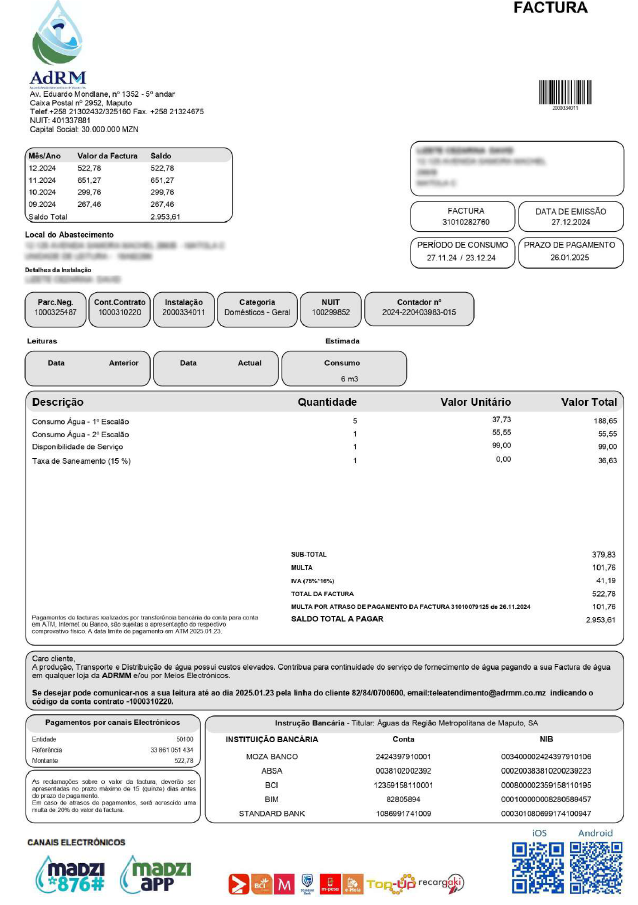
From 2013 to 2020, WSUP worked alongside AURA, the Water Supply and Sanitation Infrastructure Board (AIAS), and multiple municipalities to draft, consult, and refine a regulatory framework that could serve Mozambique’s complex urban landscape. A core innovation was the introduction of a sanitation tariff, a modest surcharge added to household water bills, earmarked specifically for sanitation improvements. The model, designed by WSUP based on surveys and stakeholder consultations, established clear principles: affordability, transparency, and equity. Under the framework, households consuming less than 10 cubic meters of water per month, typically low-income families, are exempt from the surcharge. Those who pay contribute to a ring-fenced sanitation fund managed by municipalities, enabling sustained investment in waste collection, treatment, and hygiene education.
“This was about creating a fair and functional system “Without a dedicated revenue stream, sanitation services remain dependent on external grants. Now, cities can plan and invest sustainably,” says Fátima.
The framework defines clear roles across the urban sanitation chain:
- Municipalities are designated as service providers, responsible for planning and oversight.
- AIAS holds and manages sanitation infrastructure assets.
- Water utilities collect the sanitation surcharge through their billing systems.
- AURA, as the regulator, monitors performance and enforces compliance.
By 2020, after extensive consultation and political negotiation, the framework was approved, marking a watershed moment for Mozambique’s WASH sector.
Sample utility bill
From policy to practice
Approval was only the beginning. WSUP, through funding from an anonymous donor starting in 2019, helped AURA move from paper to practice. The first phase of implementation focused on six major urban areas: Maputo, Matola, Beira, Nampula, Tete, and Quelimane. More recently, the city of Chimoio became the seventh to adopt the framework.
With WSUP’s technical assistance, AURA developed operating manuals, training modules, and key performance indicators (KPIs) for municipalities to monitor progress. Utility staff received guidance on how to apply and communicate the new sanitation surcharge, while municipal officers learned to plan investments using the new regulatory tools.
“The framework gives us confidence. Before, sanitation was seen as an afterthought. Now, it is part of the city’s core services, with clear rules, clear funding, and clear accountability,” says a sanitation director at Quelimane Municipality.
Catalysing investment and reform
The ripple effects of this regulatory shift are already visible. One of the first major projects to align with the new framework was the World Bank–funded Mozambique Urban Sanitation Project, a $130 million initiative launched shortly after the framework’s approval. The project supports sanitation infrastructure upgrades in multiple cities and draws directly on the tariff-based financing model established through WSUP and AURA’s work.
“Donors and financial institutions now see sanitation in Mozambique as investable. Regulation brings stability. It shows there is a plan, a structure, a pathway to sustainability,” said an AURA representative.
WSUP’s approach to institutional strengthening has also set a model for regional collaboration. The organisation is now working with AURA to connect Mozambique’s experience to broader efforts led by ESAWAS (Eastern and Southern Africa Water and Sanitation Regulators Association) and the World Health Organization to improve sanitation regulation in eight countries. Discussions are underway with USAID and DANIDA to expand this regional work.
Building AURA’s capacity for the future
While progress has been steady, the journey is far from over. AURA’s mandate has expanded rapidly, and the regulator must now consolidate its oversight and bring new municipalities into the fold. WSUP has supported this process through capacity-building programs, technical studies, and institutional planning.
A recent capacity assessment identified key areas for strengthening, data systems, performance monitoring, and fiscal management and made recommendations for how AURA can enhance its operations. WSUP is helping the regulator develop an onboarding strategy for new cities, ensuring that expansion is both systematic and inclusive.
“We have moved from theory to real systems change, but regulation is not a one-off achievement; it is a living process. AURA now has the tools and knowledge to sustain and evolve this framework for decades,” says Fátima.
A human impact beyond the policies
Back in Beira, the changes are not measured in frameworks or tariffs, but in cleaner streets and healthier families. The municipal sanitation department has begun organising faecal sludge collection for households connected under the new regulatory system. Community members pay a small fee, knowing it supports an official, monitored service.
“Before, trucks came when they wanted and charged whatever they liked,” says Teresa. “Now we know what we pay for and that it helps our neighbours too.”
Her neighbourhood, once known for flooding and overflowing latrines, has seen a noticeable decline in waterborne diseases. Children walk to school without stepping through stagnant waste. Local masons, trained through municipal programs linked to the new regulation, are earning a steady income constructing improved toilets.
“It’s about dignity,” says,” says Fátima. “When regulation works, it creates a system where everyone, especially the poorest, has the right to safe sanitation. That is the heart of sustainable development.”
From partnership to legacy
The collaboration between WSUP and AURA is now in its twelfth year, a rare example of continuity in development work. What started as technical assistance has evolved into institutional transformation.
By 2025, seven municipalities will have formally adopted the regulatory framework, with others preparing to join. Each city develops its own action plan, tailored to local needs but anchored in a consistent national standard. Training programs have produced a new generation of municipal officers and utility staff who understand sanitation not just as infrastructure, but as a regulated public service.
And for WSUP, Mozambique has become a blueprint for how institutional change can unlock impact at scale. “Infrastructure projects come and go,” says Fátima. “But when you build capacity and regulation, you build permanence. You create systems that continue to deliver long after the donors have left.”
Looking ahead
As Mozambique’s cities expand, the challenge of providing safe, affordable sanitation will only intensify. Climate change is straining drainage systems, and rapid urbanisation continues to push services to their limits. Yet, thanks to the foundations laid by WSUP and AURA, the country is now better equipped to meet these pressures.
The next phase of the partnership will focus on scaling the framework nationwide, deepening AURA’s monitoring capabilities, and integrating lessons into regional policy platforms. WSUP is also exploring digital tools for tariff management and performance reporting, further strengthening transparency and accountability.
“The framework is not the end; it is the beginning of a new era. It is about ensuring every Mozambican city, from Maputo to Nampula, can provide dignified sanitation for its residents. That is what true regulation makes possible,” says Fátima.
As Teresa closes the door to her toilet and walks back into her home, the story of Mozambique’s sanitation reform comes full circle from policy meetings in Maputo boardrooms to cleaner, safer homes in its neighbourhoods.
And that is the quiet power of WSUP’s work: changing systems so that ordinary people can change their lives.