
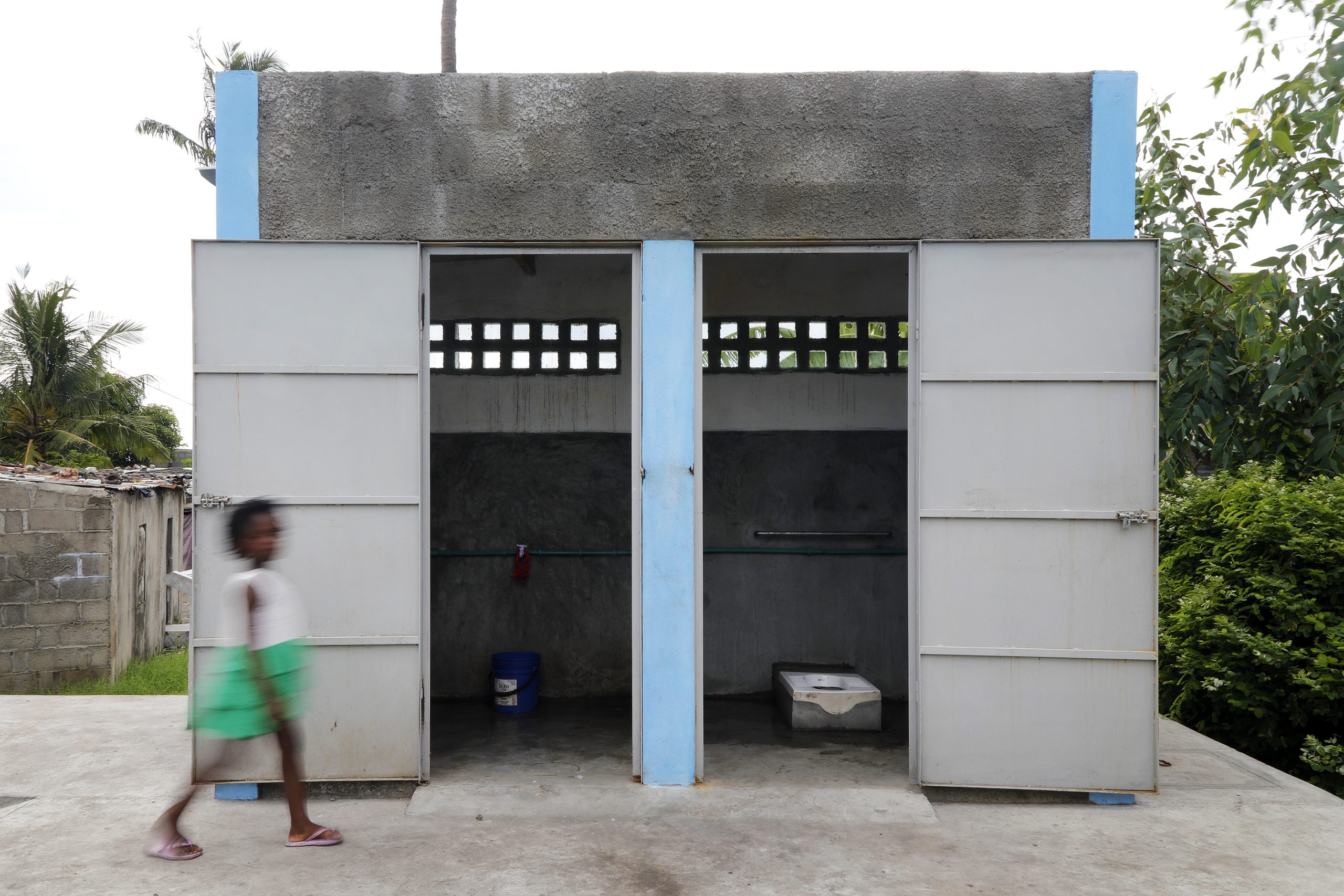
WSUP has long argued that well-designed and well-managed shared sanitation should be recognised as a good, safe, and sustainable solution for the millions who live in crowded, low-income, informal settlements.
We now have evidence that this was a well-placed belief, as we share the results of groundbreaking research demonstrating a direct link between high-quality shared sanitation and improved health and development outcomes. These results have the potential to supercharge progress towards achieving safe sanitation for all, which is one of WSUP’s Big Initiatives for 2025–2030.
Game-changing research
The Maputo Sanitation (MapSan) trial, which ran from 2013 to 2024, is the first rigorous study of its kind: a before-and-after controlled study designed to evaluate the impact of WSUP’s high-quality shared sanitation on diarrhoeal diseases and wider health impacts in children under five. Partners in the trial included the University of North Carolina, the London School of Hygiene and Tropical Medicine, and the Instituto Nacional de Saúde, Mozambique.
The study tracked health outcomes among children under five years old in low-income, informal neighbourhoods with improved shared toilets installed by WSUP, and in communities without improved facilities. The results at the end of the five years showed a major public health breakthrough. Children born into households using WSUP’s high-quality shared toilets were less likely to be exposed to enteric pathogens, leading to a 31% reduction in stunting—a condition of impaired growth caused by chronic infection and poor nutrition.
Stunting has lifelong consequences, including impaired cognitive development and poorer educational attainment. These outcomes are linked to reduced economic potential, lower adult wages, lost productivity, and an increased risk of chronic disease later in life.
This 31% reduction substantially outperforms the results of nutritional support programmes, which typically achieve stunting reductions of 10–20% at comparable cost levels. This is the first robust, long-term evidence that high-quality shared sanitation can deliver significant health benefits.
MapSan research has also demonstrated quality-of-life gains from improved toilets, including greater dignity, reduced stress, better mental well-being, and enhanced safety for women and girls. These findings affirm that sanitation is not only a health intervention but also a matter of human rights, gender equity, and urban safety.
Rethinking what “progress” means
According to the World Health Organization (WHO) and UNICEF’s Joint Monitoring Programme (JMP), which tracks global progress towards SDG 6, shared sanitation is currently classified as a limited service, as such facilities are often poorly designed and maintained.
Yet in densely populated urban areas—especially informal settlements, where families often live in one or two rented rooms within shared compounds—individual household toilets are simply out of reach. Even with major investment in slum upgrading, including the extension of WASH services, shared sanitation is often the only viable option. Not recognising high-quality shared sanitation as an acceptable service limits investment in a solution that could reach millions living in urban slums.
The results of this study shift shared sanitation from a reluctant compromise—“better than nothing”—to a scientifically validated, scalable public health solution. MapSan demonstrates that in contexts where space and infrastructure constraints make private toilets unfeasible, shared sanitation offers a viable, life-changing, and cost-effective alternative.
A call to action: From evidence to equity
WSUP is committed to leveraging this powerful evidence to mobilise support for delivering high-quality shared sanitation at scale as one of our Big Initiatives for 2025–2030.
We aim to scale up high-quality shared sanitation across multiple countries, continuing to demonstrate how it can address the elevated prevalence of stunting among children born into urban slums.
WSUP calls for greater recognition of high-quality shared sanitation as a legitimate, high-impact, and cost-effective solution that should be adopted by governments and implementing agencies as part of a multi-tiered sanitation strategy. This includes its recognition in post-2030 global monitoring frameworks, defined by strict standards of design, management, and hygiene. Such a shift would help unlock financing for solutions that tackle both poor sanitation and child stunting in the most challenging urban contexts.