
By Sylvie Ramanantsoa
In cities across Madagascar, sanitation is often framed as a challenge, overflowing pits, unmanaged waste, and growing pressure on fragile urban infrastructure. But what if the same waste streams that strain our cities could instead power local economies, create jobs, and strengthen climate resilience?
Across Madagascar, a growing movement, supported by organisations such as Water and Sanitation for Urban Populations (WSUP) working alongside municipalities and communities, is beginning to answer that question. Circular sanitation, an approach that treats waste not as a liability but as a resource, is transforming how communities think about water, sanitation, and economic opportunity.
Urbanisation is accelerating across the country, bringing both opportunity and pressure. Many low-income urban communities lack reliable sanitation services, while waste management systems struggle to keep pace with population growth. Traditionally, sanitation waste has been treated as something to be removed and disposed of, often at significant environmental and financial cost.
But circular economy thinking offers a different perspective. Rather than treating waste as the end of a process, circular sanitation looks at how waste streams can be reused, recycled, and transformed into valuable products. Organic waste can be composted to support urban agriculture. Recyclable materials can be repurposed into marketable goods. Wastewater can be reused in ways that conserve precious freshwater resources.
The result is a model that simultaneously improves sanitation services, protects the environment, and creates new economic opportunities.
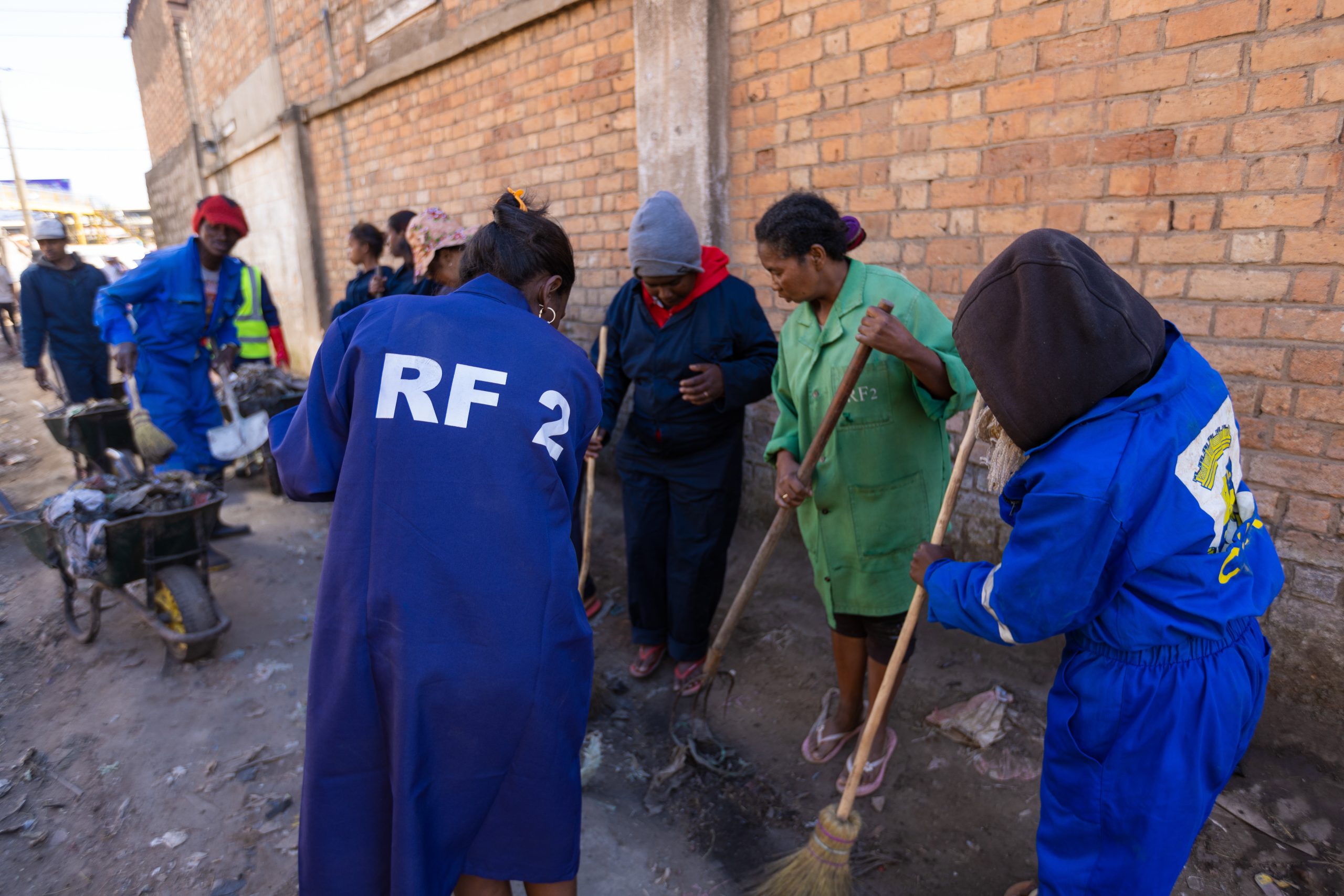
In Madagascar, this shift is already taking shape at the community level. Across several cities, community-based sanitation enterprises — locally known as RF2 groups — are emerging as key actors in delivering sanitation and environmental services. Today, more than two dozen community organisations and municipalities are providing services such as waste collection, canal cleaning, and pit emptying.
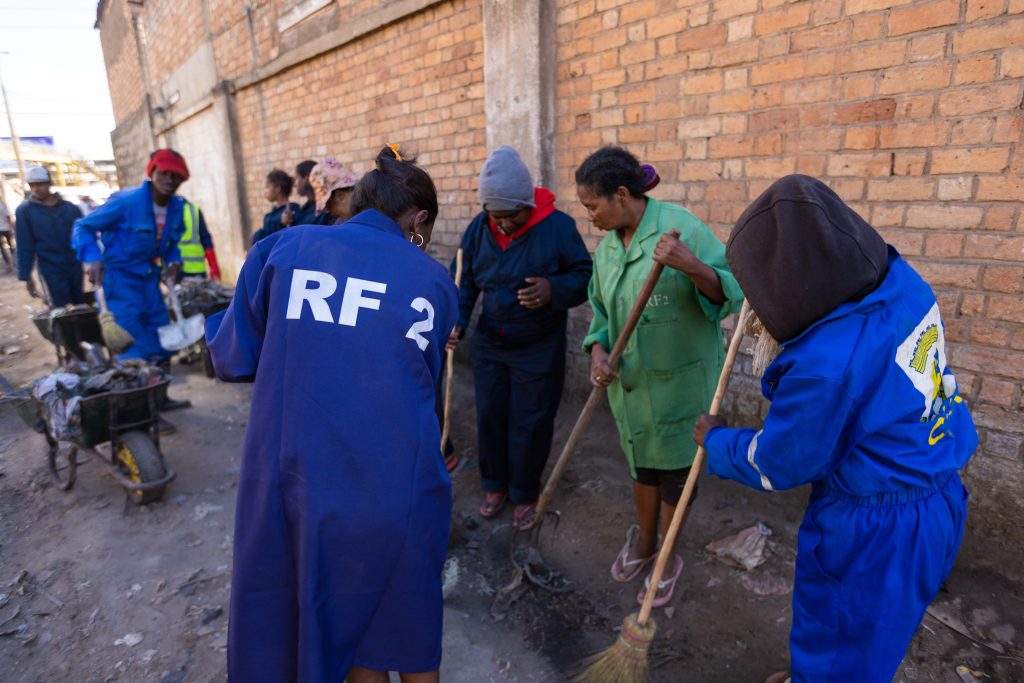
With technical and business support from WSUP and local government partners, these groups are evolving from informal service providers into structured sanitation enterprises. Training in business development, marketing, sanitation services, and collaboration with local authorities is helping them build stronger, more sustainable operations. In neighbourhoods such as Ambavahaditokana, these enterprises are demonstrating how sanitation services can become viable local businesses while improving environmental conditions.
The economic potential of circular sanitation becomes even clearer when waste begins to generate value.
Across participating communities where WSUP has supported circular sanitation initiatives, waste sorting, composting, and recycling initiatives are creating new income streams linked directly to sanitation services. Organic waste collected from households can be transformed into compost used in urban agriculture. Plastic waste can be repurposed into products such as cleaning brushes. Other initiatives are producing ecological charcoal and liquid soap from recovered materials.
These activities are creating green jobs, particularly for women and young people, while strengthening the financial sustainability of sanitation enterprises. Instead of relying solely on external funding or limited municipal budgets, local sanitation operators can generate revenue from recycled products and resource recovery.
Circular sanitation also brings benefits that extend beyond income generation. When communities begin to see waste as a resource, environmental awareness and collective responsibility grow. Waste sorting becomes more common. Streets and canals become cleaner. Residents become active participants in maintaining healthier neighbourhoods.
The impact is not limited to communities alone. Schools are also becoming powerful entry points for circular sanitation approaches.
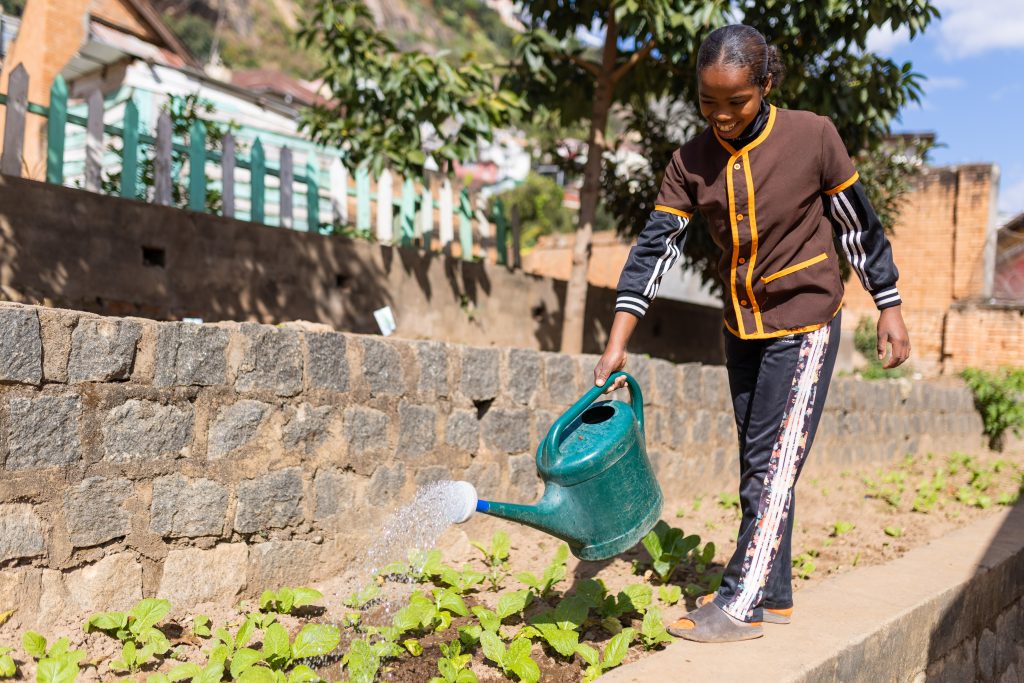
In several public primary schools in Antananarivo, initiatives supported through partnerships involving WSUP are introducing students to composting, waste sorting, and water reuse. Rainwater harvesting systems capture water for toilet flushing, while wastewater from handwashing stations is filtered and reused for the school garden. Organic waste from school activities is composted and used to fertilise the gardens.
These gardens produce crops that can be sold to teachers and the surrounding community, generating small but important revenues that help maintain sanitation facilities. At the same time, students learn practical lessons about environmental stewardship and sustainable resource management.
Such initiatives demonstrate that circular sanitation is not just a technical solution, it is also an educational and cultural shift. By embedding these practices in schools, a new generation grows up understanding that waste can be part of a sustainable economic cycle.
Government institutions are increasingly recognising the potential of these approaches. Circular economy practices are now being integrated into national guidance for WASH-friendly schools, helping ensure that environmental sustainability and resource recovery become part of broader sanitation programmes.
At the municipal level, service operators are also exploring how circular economy models can strengthen long-term financial sustainability. Waste recycling, compost production, and resource recovery can help sanitation services generate additional revenue while reducing the environmental burden of unmanaged waste.
These developments point toward a broader opportunity. Circular sanitation can help cities address multiple development challenges at once: improving sanitation access, reducing environmental pollution, supporting climate adaptation, and creating local jobs.
Madagascar, like many rapidly urbanising countries, faces complex water and sanitation challenges that cannot be solved solely through infrastructure investments. Sustainable solutions must also build local capacity, create viable service markets, and empower communities to become part of the solution.
Circular sanitation offers a pathway toward that future.
When waste is seen not as a problem but as a resource, new possibilities emerge. Communities can turn discarded materials into valuable products. Local entrepreneurs can build businesses around sanitation services. Municipalities can strengthen their waste management systems while creating jobs.
In short, sanitation can become a driver of economic opportunity rather than a drain on limited resources.
For countries seeking to accelerate progress toward the Sustainable Development Goals, particularly those related to water, sanitation, climate resilience, and decent work, circular sanitation offers a powerful, practical approach.
The lesson from Madagascar is clear: with the right partnerships, training, and policy support, sanitation systems can do more than protect public health. They can help power local economies.
And sometimes, the most valuable resource is the one we once considered waste.
Sylvie Ramanantsoa is the Country Manager for WSUP Madagascar. She can be reached at comms@wsup.com.